• Skip to main content

Tifanie Charboneau

Hide Search

network

Tracing a Packet through the OSI network layers, part one

Admin · December 23, 2025 ·

The OSI model has seven layers. The layers are conceptual, for the most part. The bottom most layer is usually considered the physical layer. This is where all the information is in ones or zeros, 1 or 0, as the written form of ON or OFF. An ON or OFF switch, a hole in a punchcard, or a solid spot on the punchcard, a positive electric charge or an negative charge. A tone, a silence.

A one or zero, 1 or 0, is one tiny bit of information. More information is sculpted from deliberate groups of ones and zeroes. The smallest group is called a bit- one or zero. The typical smallest grouping is called a byte- eight possible yes or no spots- 11110000- or 10101010- or any other combination.

The computer works with the ones and zeros, the zots and zaps of electricity rushing over wires from here to there, like commuters crowding on to subway platforms and then into subway cars. The steps in the model between the keyboard and the electrons form the layers of the OSI model.
Wireshark Reading

Admin · October 25, 2025 ·


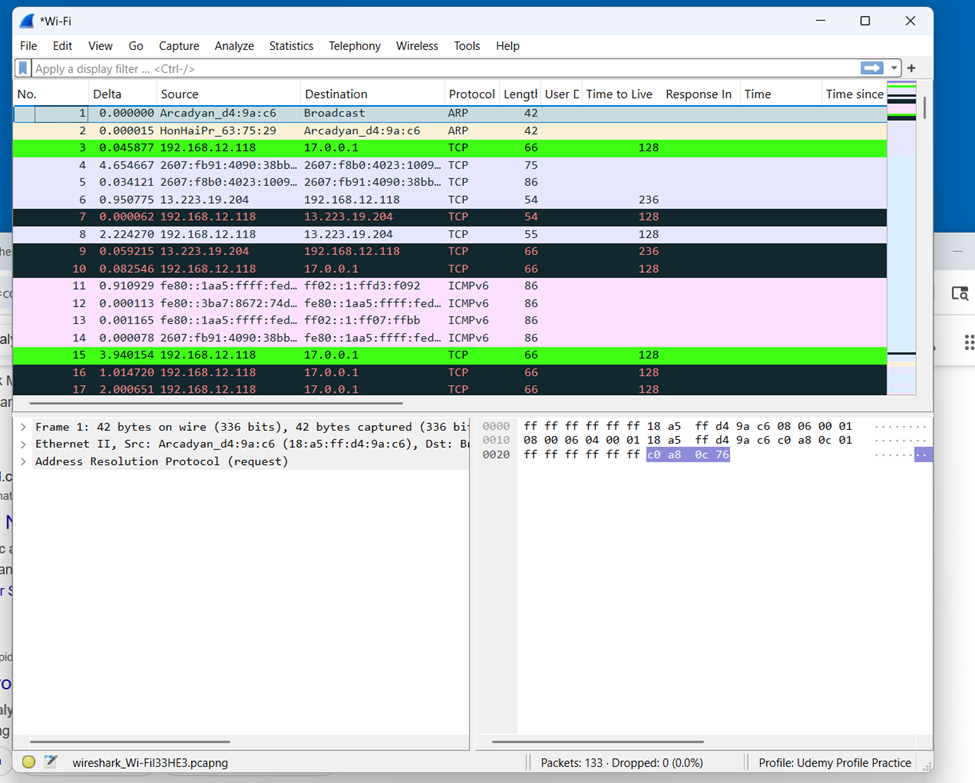
This is a screenshot of a packet capture. It shows the first part of the minute when Wireshark was called up on the computer and began capturing. The screenshot shows 133 packets captured. None have been lost.

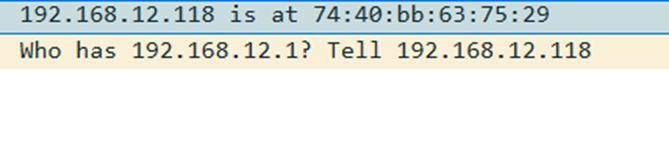
The first packet is a broadcast packet. The router has sent out an ARP request to see what computers are responding on this home network. The sender IP address is 192.168.12.1, which is the router. The router sent out a broadcast. The IP address target was 192.168.12.118. This is this computer’s assigned IP address on this network, which is a private home network.

The second packet is a routing ARP packet. The third packet is a transmission control protocol syn packet from a private address- 192.168.12.118 to 17.0.0.1. The private address is this computer, as it is a home computer on a mass market subscription router.

The three black lines show a TCP ACK unseen: a transmission control protocol acknowledgement was not seen, packet 7. Packet 9 is black to show that a packet was not captured. Packet 10 is a retransmission of a syn packet.

Packets 12, 13, and 14 are neighbor advertisements. This is a home network with multiple computers on the system.


This is the filter for the arp request. The computers have such poignant questions for each other, as they speak into the void.


Tifanie Charboneau

Copyright © 2026 · Monochrome Pro on Genesis Framework · WordPress · Log in